” … ‘Relative Eternity’… Tea House precinct, Nitobe Memorial Garden …”.(Photo: M. Cynog Evans.) ● With each generation, the amount of environmental degradation increases, but each generation tends to perceive that degraded condition as the nondegraded condition, as the normal experience. — Peter H. Kahn Jr. and Thea Weirs (2017) ________________________________________
Silence (Thunder)
Mokurai
17.08.20
just when did one – (we
… for example) – come to
notice that moving in and
out can never (no … not
once … from here on … in)
inflect a motive that passes
(there and back) … on to some
single sameness disclosed
… as a no(t) yet complete
staying … yet again … gone?
________________________________________
________________________________________
________________________________________
________________________________________
________________________________________
________________________________________
________________________________________
________________________________________
________________________________________
You have heard of the knowing that comes from the result of knowledge, but you do not yet know of the knowing that comes from not knowing.
Perpendicular Direction/Transversal Movement 垂直方向/橫向運動
Posted August 30, 2020
________________________________________
A nuclear test was conducted by the United States at Enewetak atoll (Marshall Islands archipelago, Pacific Ocean) in November 1952. ________________________________________
________________________________________
UN News – 26 August 2020 | Peace and Security Prioritize a nuclear-free world
The International Day against Nuclear Tests has been commemorated annually since 2010. The date 29 August marks the anniversary of the 1991 closure of the Semipalatinck test site in Kazakhstan, the largest nuclear test site in the former Soviet Union. Despite the adoption of the Comprehensive Test-Ban Treaty, in 1996, thousands of nuclear weapons remain at the ready in stockpiles across the world. For UN Assembly President Tijani Muhammad-Bande, the COVID-19 pandemic has underscored the need for collective action to safeguard humanity … including … making a nuclear-free world a priority.
________________________________________
________________________________________
The mushroom cloud over Nagasaki in August 1945. Photograph: Nagasaki Atomic Bomb Museum. ________________________________________
________________________________________
” … ‘Enormous Distance’…”. (Photo: M. Cynog Evans.) ● Language is strange.— Ursula K. Le Guin (2018) ________________________________________
________________________________________ Ch’i-chi
(864-937)
On my pillow little by little waking, suddenly I hear a single cicada cry – at that moment I know that I have not died.
________________________________________
________________________________________
The stranger’s way of looking at things, the eye of a man who DOES NOT RECOGNIZE, who is beyond this world, the eye or frontier between being & non-being – belongs to the thinker. It is also the eye of a dying man, a man losing recognition. — Paul Valéry (1896)
________________________________________
Before we ask WHAT CAN WE DO? we have to first consider the question HOW MUST WE THINK?
— Joseph Beuys (1982)
________________________________________
________________________________________
________________________________________
Yuliya Talmazan and Stella Kim, NBC News – 28 July 2020 North Korean leader Kim Jong Un hailed his country’s nuclear weapons as a powerful deterrent against military threats, state media reported, as prospects of denuclearizing the Korean peninsula continue to dim. “We have become able to reliably defend ourselves against any form of high intensity pressure and military threat by imperialist reactionaries and other hostile forces,” Kim said during a reception [27 July 2020] for veterans making the 67th anniversary of the end of the 1950-53 Korean War.
Perpendicular Direction/Transversal Movement 垂直方向/橫向運動
Posted August 23, 2020
________________________________________
Tiantong Rujing
(d. 1228)
The clouds mindlessly drift past the mountain cliffs. Four years ago, or just yesterday, is today. In due course, water returns to its source. Four years hence, or just today, is yesterday.
________________________________________
________________________________________
________________________________________
________________________________________
________________________________________
Point of view = 1°; through the vanishing point = 360°.
— Edmund Carpenter (1970)
________________________________________
” … ‘Nothing Discontinuous’ …”. (Photo: M. Cynog Evans.) ________________________________________
________________________________________
Silence(Thunder)
Mokurai
17.08.20
just when did one – (we
… for example) – come to
notice that moving in and
out can never (no … not
once … from here on … in)
inflect a motive that passes
(there and back) … on to some
single sameness disclosed
… as a no(t) yet complete
staying … yet again … gone?
________________________________________
________________________________________
________________________________________
Life has no meaning apriori … it is up to you to give it meaning, and value is nothing but the meaning that you choose.
Perpendicular Direction/Transversal Movement 垂直方向/橫向運動
Posted August 5, 2020
________________________________________
HenryL. Stimpson
(1947)
It was in the fall of 1941 that the question of atomic energy was first brought to my attention [as United States Secretary of War]. At that time President Roosevelt appointed a committee to advise him on nuclear fission. The policy adopted and steadily pursued by the president and his advisers was a simple one: to spare no effort in securing the earliest possible successful development of an atomic weapon.
[ … ]
The exact circumstances in which that weapon might be used were unknown to any of us until the middle of 1945. The principal political, social, and military objective of the United States that summer was the prompt and complete surrender of Japan. Only the complete destruction of her military power could open the way to lasting peace.
Because of the importance of the atomic mission against Japan, the detailed plans were brought to me by the military staff for approval. With President Truman’s warm support I struck off the list of suggested targets the city of Kyoto. Although it was of considerable military importance, it had been the ancient capital of Japan and was a shrine of art and culture. I approved four other targets.
Hiroshima was bombed on August 6, and Nagasaki on August 9. These two cities were active parts of the Japanese war effort. One was an army center; the other was naval and industrial.
________________________________________
________________________________________
________________________________________
________________________________________
SHIKI
(d. 1902)
A sudden shower
drums down upon
the heads of the carp
________________________________________
________________________________________
” … ‘Beyond Study’ …”. DigitalOriginal. (Image: M. Cynog-Evans.)
Perpendicular Direction/Transversal Movement 垂直方向/橫向運動
Posted July 22, 2020
________________________________________
________________________________________
________________________________________
________________________________________
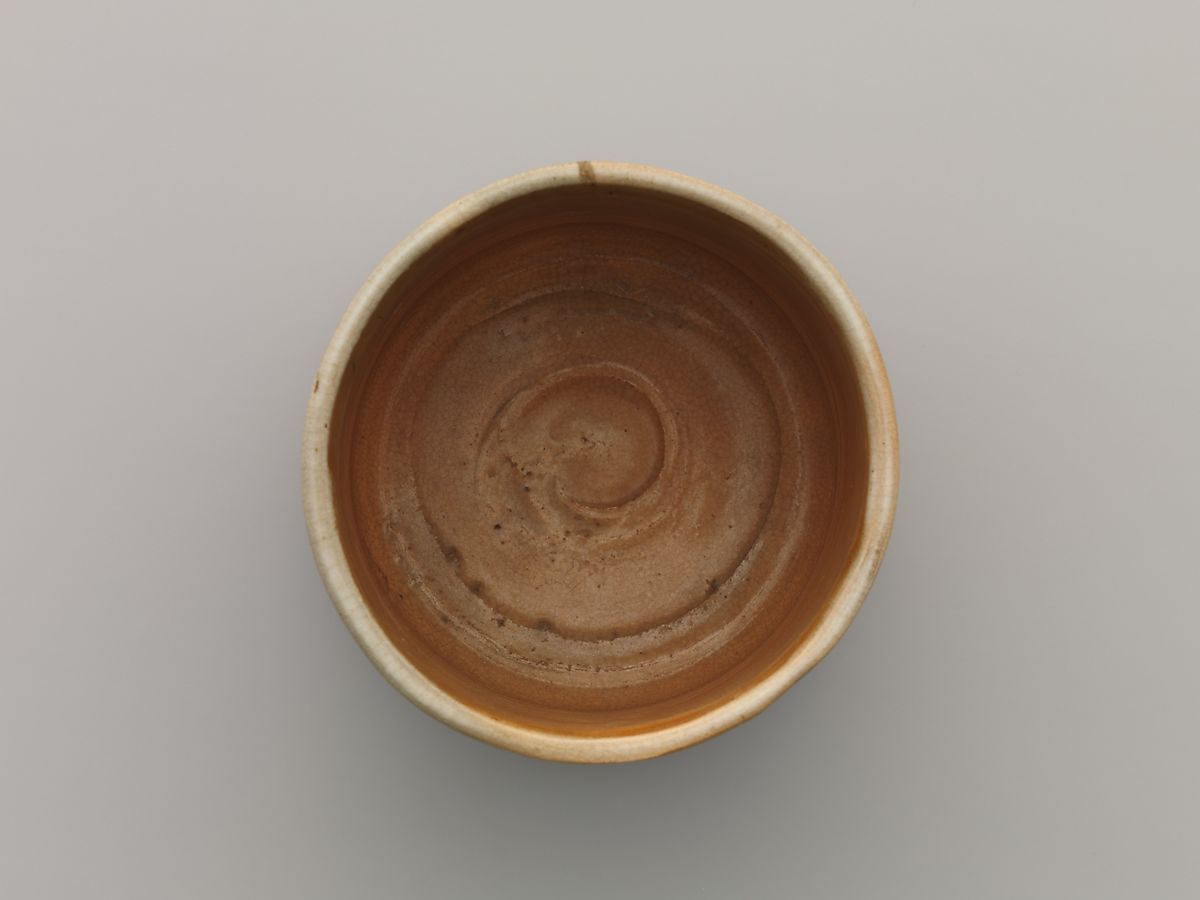
Kiyomizu Robukei I, Gohon(Korean-Style)TeaBowlwithCranes – second half of the 18th century. Stoneware with white-slip inlay, underglaze iron, and red and white slip under transparent glaze (Kyoto ware, Kiyomizu type). H: 3 3/4 in. (9.5 cm); Diam. of rim 3 7/8 in. (9.8 cm); Diam. of foot 2 1/4 in. (5.7 cm).
Curatorial Record:
Robukei’s tea bowl is, in fact, a copy of a late seventeenth century Busan-kiln product (export ware made in Korea according to Japanese specifications), and the model he reprised was itself a nod to earlier prototypes (Goryeo period celadon and fifteenth-and-sixteenth-century revivalist celadon exported to Japan). The Kyoto master affirmed his place in this prestigious lineage by literally leaving his mark: his seal is stamped near the base.
ths konkreet vizual pome is from th anshula rhapsodee cumming soon from noir-z
●
________________________________________
MarshallMcLuhan
(1970)
Poets and artists live on frontiers. They have no feedback, only feedforward. They have no identities. They are probes.
________________________________________
________________________________________
” … ‘Nowhere None’ …”. Digital Original. (Image: M. Cynog Evans.)
________________________________________
________________________________________
_______________________________________
METAMULTIPLE
(That
‘Still Unspecified’
Word)
Mokurai
2020
“He who acts, harms, he
who grabs lets slip.”
— Lao Tzu
Multiple people should have been
there when crow and cross coincided
(as if to confound confusion) at that moment (there … again) when (yes) there was soon to be seen something
far (no) … close … (not) … but (or)
… even so … still … (blank) active …
in (blink) combining ‘sensitivity to
nature’ … and … more (fully) found
… an ‘incontrovertible demise’ …
which … (while) previously moving
(on) … can no longer make an ‘end
of road’ appear to become invisible (empty) … as another break-through
of ‘absence’ into (almost) everything.
________________________________________
Dogen Zenji
(1246)
Givento Hironaga
Hatano
The whole universe
shatters into a hundred pieces.
In the great death
there is no heaven, no earth.
Once body and mind have turned over
there is only this to say:
Past mind cannot be grasped,
present mind cannot be grasped,
future mind cannot be grasped.
[ Translated from the Japanese by Kazuaki Tanahashi ]
●
Translations can be seen as ripples emanating from the point where the original poem enters the pond of meaning. Where original nuances are lost, new ones are generated.
Perpendicular Direction/Transversal Movement 垂直方向/橫向運動
Posted July 9, 2020
________________________________________
________________________________________
________________________________________
MountFujiCherry – NitobeMemorial Garden, UBC (Vancouver) – planted on 16 March 2020. (Photo: Ryo Sugiyama … 8 July 2020.)
________________________________________
________________________________________
The Korean War … 1950-1953
(Veterans Affairs Canada – 2019)
The Japanese had occupied neighbouring Korea in the early decades of the 20th century. With the defeat of Japan at the end of the Second World War, however, their empire was dismantled. In one of the opening moves of what would come to be called the Cold War, the Soviet Union deployed troops into the northern portion of the newly liberated Korean peninsula while American soldiers moved into the southern half. A boundary was established between these two zones along the 38th Parallel of latitude.
The Soviets and Americans withdrew their forces within a few years, but not before a communist government had been established in the north and a democratic government in the south. Tensions between the two sides grew, climaxing on June 25, 1950, when North Korean troops invaded South Korea. This set off more than three years of fighting in the place traditionally known as the “Land of the Morning Calm.”
18 UN member nations – including Canada – would contribute units to a multinational force that would serve with American and South Korean forces in Korea.
The Chinese intervened in the war in the fall of 1950 and launched a massive offensive [against] the UN and South Korean Troops
After more than three years of hostilities and a prolonged negotiation process, an armistice to end the active fighting in the Korean War was finally signed in Panmunjom on July 27, 1953. Some 7,000 Canadian troops would serve in Korea in a peace support role after the armistice – before the last [Canadian] military forces departed in 1957.
●
CanadiansremembertheKoreanconflict
Murray Brewster – CBC, June 25, 2020
[Excerpt]
It took an awfully long time – almost three decades – to convince the federal government to carve the dates of the Korean War into the side of Canada’s national war memorial.
Tucked away on the side of the soaring monument in downtown Ottawa, next to Canada’s Tomb of the Unknown Soldier, the inscription is easy to miss. It is a sad illustration of where the bloody, three-year-long war and its stalemate sit in the country’s collective memory.
…
More than 26,000 Canadians served in the war, on land, at sea, and in the air. The Korean conflict [1950-1953] took the lives of 516 Canadians, making it the country’s third most deadly conflict.
For many Canadians, then and now, the Korean War remains a distant, murky event. Even when Canadians were still fighting and dying on the peninsula, few people back home had a clear idea of what was going on.
________________________________________
________________________________________
Mao Zedong”s Korean War “Order to the Chinese People’s Volunteers” – October 1950
[ Excerpt]
Toleading comrades of the Chinese People’s Volunteers at all levels:
In order to support the Korean people’s war of liberation and to resist the attacks of the U.S. imperialism and its running dogs, thereby safeguarding the interests of the people of Korea, China and all of the other countries in the East, I herewith order the Chinese People’s to march speedily to Korea and join the Korean comrades in fighting the aggressors and winning a glorious victory.
________________________________________
” … ‘Ape (Aping)’ …”. DigitalOriginal. Image: M. Cynog-Evans.
________________________________________
________________________________________
HerbertMarcuse
(1964)
The capabilities (intellectual and material) of contemporary society are immeasurably greater than ever before – which means domination over the individual is immeasurably greater than ever before.
The union of growing productivity and growing destruction; the brinksmanship of annihilation; the surrender of thought, hope, and fear to the decisions of the powers that be; the preservation of misery in the face of unprecedented wealth constitute the most impartial indictment – even if they are not the raison d’être of this society but only its by-product: its sweeping rationality, which propels efficiency and growth, is itself irrational.
________________________________________
________________________________________
________________________________________
” … ‘Revery (Reveries) …”. DigitalOriginal. Image: M. Cynog-Evans.
Perpendicular Direction/Transversal Movement 垂直方向/橫向運動
Posted June 30, 2020
________________________________________
________________________________________
________________________________________
________________________________________
UNNEWS
HumanRights
26 June 2020
Therepressionof “fundamental freedoms” by the Chinese Government prompted nearly 50 UN independent experts on Friday [26 June] to express their continuing alarm, urging the country to “abide by its international legal obligations”.
The experts also raised “grave concerns” on issues ranging from the collective repression of specific communities – “especially religious minorities, in Xinjiang and Tibet” – to disappearances of human rights defendants across the country.
…
The independent experts acknowledge that the Government of China has responded to communications, if almost always to reject criticism.
________________________________________
” … ‘Sincerity’ …”. DigitalOriginal. (Image: M. Cynog-Evans).
________________________________________
John Thomson (Scottish, 1887-1921), BronzeTemple, Show-Shan. Collotype, circa1871.
●
Wu Hung (2011):
After the invention of photography [1839], the new visual technology was immediately employed to document ruined monuments around the world. … Thomson’s photograph of a temple in Beijing’s Summer Palace (Yiheyuan) captures the image of a building made of bronze and marble. Instead of emphasizing the pavilion’s durability, however, he connects its precise contour with the wild brambles that have half-buried it.
________________________________________
________________________________________
We must not confuse the present with the past. With regard to the past, no further action is possible.
— Simone de Beauvoir (1949)
________________________________________
________________________________________
Soami (d. 1528), LiBai Viewing the Waterfall at Mt. Lu. Hanging scroll – ink on paper – Japan. Asian Art Museum of San Fransisco.




 CAUSA CONNECTIVITY